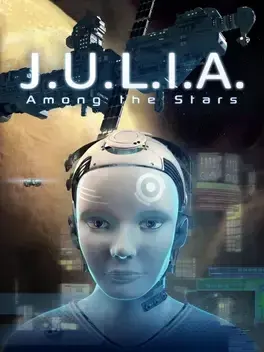
J.U.L.I.A.: Among the Stars is a science-fiction adventure and puzzle game developed by CBE Software. Designed as a reimagined version of the original J.U.L.I.A. release, the game combines narrative-driven exploration, environmental puzzles, and scientific problem-solving within a lonely and atmospheric space setting.
The story follows Rachel Manners, an astrobiologist who awakens from cryogenic sleep after her spacecraft reaches a distant star system. Upon waking, she discovers that the rest of the crew has disappeared under mysterious circumstances. Alone aboard the ship, Rachel’s only companion is J.U.L.I.A., an advanced artificial intelligence system responsible for assisting with exploration, research, and survival.
Gameplay centers around investigating planets within an unfamiliar solar system to uncover what happened to the missing crew. Players travel between planets using drones and scanning equipment to analyze alien environments, gather data, and solve complex scientific challenges. Each location presents unique hazards, puzzles, and environmental conditions that gradually reveal clues tied to the larger mystery.
A major gameplay mechanic involves interacting with the AI companion, J.U.L.I.A. The AI assists players by analyzing data, managing systems, and helping solve puzzles. The relationship between Rachel and J.U.L.I.A. becomes a central part of the narrative, exploring themes of isolation, trust, artificial intelligence, and human survival in deep space.
Puzzle-solving is deeply integrated into the exploration systems. Players complete scientific analysis tasks such as restoring communications, repairing damaged systems, rerouting energy networks, and decoding alien signals. Many puzzles are based on logic, pattern recognition, and resource management rather than reflexes or combat.
Unlike action-focused sci-fi games, J.U.L.I.A.: Among the Stars emphasizes atmosphere, storytelling, and intellectual exploration. The game encourages players to carefully examine environments, read logs, analyze data, and piece together narrative details through investigation. This creates a slower-paced but immersive experience focused on discovery and mystery.
The planetary environments vary significantly, ranging from frozen wastelands and volcanic landscapes to abandoned research stations and alien ecosystems. Each world contains environmental storytelling elements that hint at past events and hidden dangers.
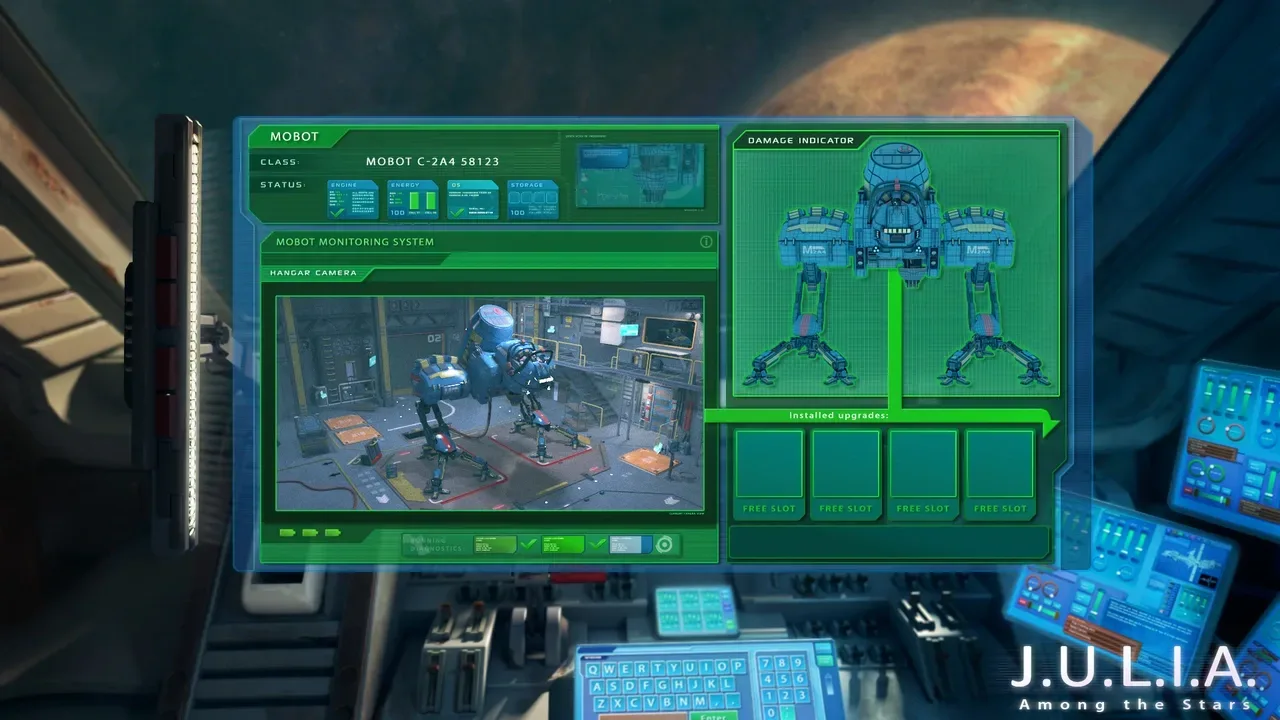
Visually, the game uses detailed pre-rendered environments and atmospheric lighting to create a believable science-fiction setting. Space stations, planetary surfaces, and technological interfaces are designed with a grounded sci-fi aesthetic inspired by realistic space exploration concepts.
The soundtrack and sound design reinforce the feeling of solitude and tension. Ambient electronic music, distant mechanical noises, and quiet moments of silence contribute to the sense of isolation experienced throughout the journey.
Narratively, the game explores philosophical and emotional themes including loneliness, humanity’s relationship with technology, scientific curiosity, and survival far from Earth. Dialogue between Rachel and J.U.L.I.A. provides both emotional grounding and intellectual discussion as the mystery unfolds.
Story-driven sci-fi adventure gameplay
Planetary exploration and investigation
Scientific puzzle-solving mechanics
AI companion interaction system
Atmospheric space exploration setting
Environmental storytelling and mystery
Multiple alien planets to explore
Logic and research-based gameplay
Detailed sci-fi visual design
Emotional and philosophical narrative themes
5 Fragen
Noch eine Frage?
Alle FAQ ansehen